Wooden structures can last for generations when properly maintained, but they are not immune to insect damage. Two of the most common wood-damaging pests are termites and woodworm. Although both attack timber, they are very different pests with distinct behaviors, damage patterns, and treatment methods. Unfortunately, homeowners often confuse the two because the damage may appear similar at first glance.
Correctly identifying whether your property has termite damage or woodworm damage is essential. Using the wrong treatment can allow the infestation to continue, leading to more extensive repairs and unnecessary expense. Understanding the differences between these pests helps homeowners take the right action and better protect their wooden structures.
In this guide, we’ll compare termite damage and woodworm damage, explain the warning signs of each, and provide practical tips for identifying them correctly.
What Are Termites?
Termites are social insects that live in colonies and feed continuously on cellulose, the main component of wood.
The most common types include:
- Subterranean termites
- Drywood termites
- Dampwood termites
Depending on the species, termites may live underground or entirely inside dry wood.
What Is Woodworm?
Woodworm is the common name for the larvae of several species of wood-boring beetles.
Common examples include:
- Common Furniture Beetle
- Deathwatch Beetle
- House Longhorn Beetle
- Powderpost Beetles
The larvae feed inside timber for months or even years before emerging as adult beetles through small exit holes.
How the Damage Begins
Although both pests feed on wood, they damage timber in different ways.
Termites
Termites consume wood continuously while living in organized colonies. Their galleries often follow the grain of the wood and can affect large sections of structural timber if left untreated.
Woodworm
Woodworm larvae tunnel through timber individually while feeding. Once mature, they emerge as adult beetles through small exit holes, leaving characteristic holes and fine wood dust behind.
Exit Holes
One of the easiest ways to distinguish woodworm from termites is by looking for exit holes.
Woodworm
Woodworm typically leaves:
- Small, round exit holes
- Uniform openings
- Fine powdery wood dust (frass) around the holes
Drywood Termites
Drywood termites generally do not create multiple round exit holes like woodworm. Instead, they create small kick-out holes to remove pellet-shaped droppings from the colony.
Frass (Wood Dust)
The appearance of frass provides another important clue.
Woodworm Frass
Woodworm frass usually appears as:
- Fine powder
- Flour-like dust
- Light-colored wood particles
Drywood Termite Frass
Drywood termite frass consists of:
- Tiny hard pellets
- Six-sided or oval-shaped granules
- Small piles beneath infested timber
The texture is much coarser than woodworm dust.
Internal Damage Patterns
The internal appearance of damaged wood also differs.
Termite Damage
Termites often create:
- Large galleries
- Hollow wood
- Tunnels following the grain
- Extensive structural damage
The outer surface may remain intact while the inside becomes severely weakened.
Woodworm Damage
Woodworm generally creates:
- Smaller tunnels
- Numerous individual boreholes
- Localized feeding channels
Damage varies depending on the beetle species and infestation level.
Visible Signs of Termites
Common warning signs include:
- Mud tubes (subterranean termites)
- Pellet-shaped frass (drywood termites)
- Hollow-sounding wood
- Flying termites during swarming season
- Discarded wings
- Doors and windows becoming difficult to open
These signs often indicate an active colony.
Visible Signs of Woodworm
Typical indicators include:
- Small round exit holes
- Fine wood dust
- Weak timber
- Adult beetles during warmer months
- Surface crumbling around exit holes
Old exit holes do not always indicate an active infestation.
Which Causes More Damage?
The severity depends on several factors.
Termites
Termites often cause more extensive structural damage because they:
- Live in large colonies
- Feed continuously
- Can spread throughout a building
Woodworm
Woodworm damage varies depending on:
- Beetle species
- Number of larvae
- Age of infestation
- Type of timber
Many woodworm infestations remain localized if detected early.
Inspect Vulnerable Areas
Regular inspections help identify both problems early.
Inspect:
- Roof beams
- Floor joists
- Window frames
- Door frames
- Wooden furniture
- Basements
- Attics
- Decks
Look for:
- Exit holes
- Frass
- Hollow wood
- Surface cracks
- Mud tubes
- Flying insects
Routine inspections greatly reduce the risk of extensive damage.
Modern Treatment Options
Treatment depends on the type of insect involved.
Woodworm Treatment
Professional woodworm treatment may include:
- Approved chemical treatments
- Heat-based treatment technologies
- Localized timber preservation methods
Termite Treatment
Professional termite management may involve:
- Baiting systems
- Soil barrier treatments
- Localized treatments
- Whole-structure solutions
The most appropriate method depends on the termite species and the extent of the infestation.
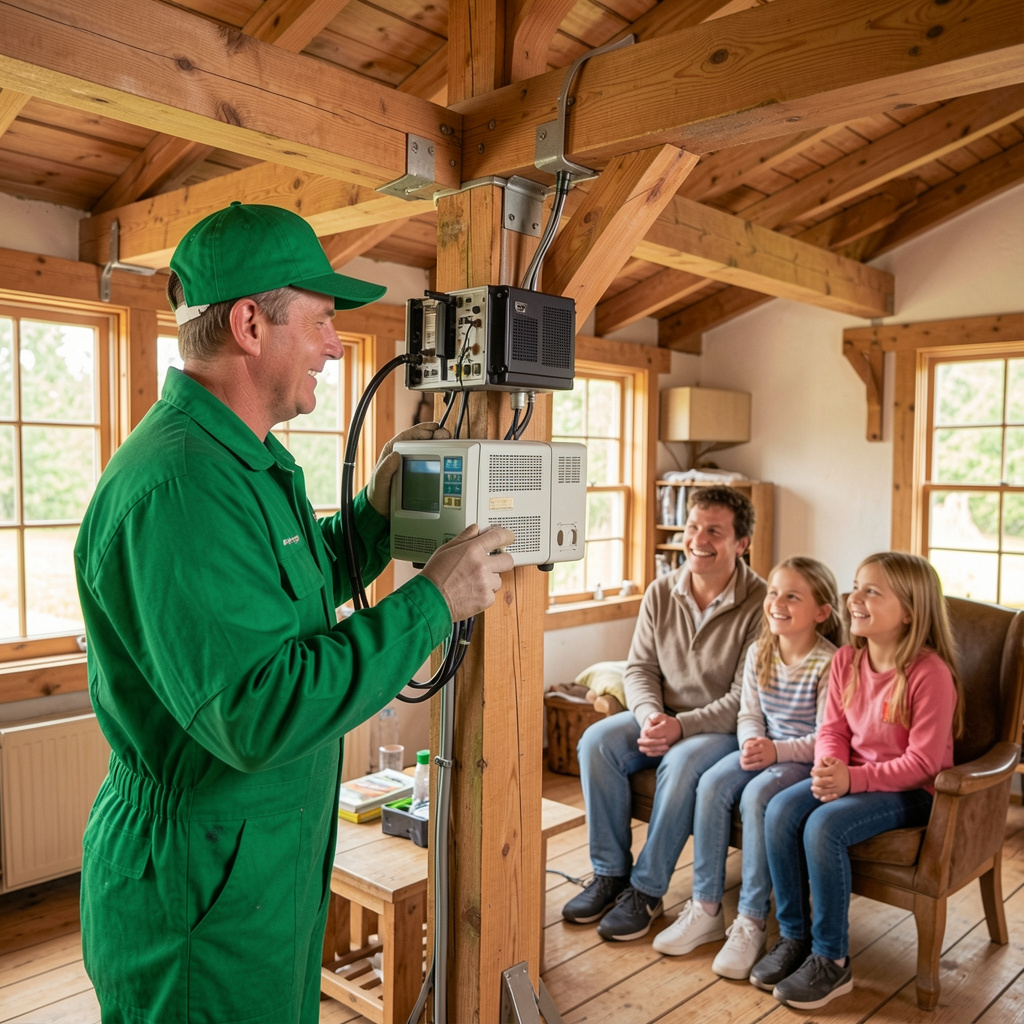
Microwave Woodworm Treatment
One increasingly popular chemical-free option for active woodworm infestations is microwave woodworm treatment.
Professional microwave equipment uses dielectric heating to generate controlled heat inside timber.
The treatment is designed to eliminate:
- Woodworm larvae
- Beetle eggs
- Pupae
- Adult wood-boring beetles
Microwave technology is specifically intended for suitable woodworm treatment applications. It is not considered a standard treatment for termite colonies, which usually require different management strategies.
Termites vs. Woodworm at a Glance
| Feature | Termites | Woodworm |
|---|---|---|
| Pest Type | Social insects | Beetle larvae |
| Main Damage | Large internal galleries | Small tunnels inside timber |
| Frass | Hard pellet-shaped droppings (drywood termites) | Fine powdery wood dust |
| Exit Holes | Kick-out holes (drywood termites) or none visible | Numerous small round exit holes |
| Colony | Large social colonies | Individual larvae |
| Common Treatment | Baiting, barriers, localized or whole-structure methods | Chemical treatments or microwave woodworm treatment |
Common Mistakes to Avoid
Avoid these common errors:
- Assuming every hole in wood is caused by termites.
- Ignoring piles of frass.
- Delaying inspections after discovering flying insects.
- Treating woodworm and termites as the same problem.
- Neglecting routine timber maintenance.
Correct identification leads to more effective treatment.
Common Myths About Wood Damage
Myth 1: All Wood-Damaging Insects Leave the Same Signs
Fact: Termites and woodworm leave different types of damage, frass, and exit holes, making careful inspection important.
Myth 2: Small Exit Holes Always Mean Termites
Fact: Small, round exit holes are more commonly associated with woodworm, while drywood termites produce kick-out holes for expelling pellet-shaped frass.
Myth 3: Surface Damage Shows the Full Extent of the Problem
Fact: Both termites and woodworm can cause significant internal damage before obvious surface signs appear.
Conclusion
Although termite damage and woodworm damage may seem similar at first, they have distinct characteristics that make identification possible. Woodworm typically leaves small round exit holes and fine powdery frass, while termites often produce mud tubes, hollow timber, or pellet-shaped frass depending on the species. Understanding these differences helps homeowners choose the correct treatment and prevent unnecessary damage.
Regular inspections, prompt maintenance, and early detection remain the best defenses against wood-damaging insects. By learning to recognize the warning signs of both termites and woodworm, homeowners can protect their timber, preserve the structural integrity of their property, and reduce the risk of costly repairs.Visit https://www.shashel.eu online for more details.